Compare income protection insurance
Find a policy that can pay your bills when you're too sick or injured to work.
Find a policy that can pay your bills when you're too sick or injured to work.
You pay the same price as buying directly from the income protection insurer.
We're not owned by an insurer (unlike other comparison sites).
We don't ask for your phone or email.
We've done 100+ hours of policy research to help you understand what you're comparing.
Income protection pays a monthly wage if you need to take time off work due to a sudden accident or illness. Most insurers will pay up to 70% of your pre-tax income. They'll also set a maximum benefit, usually around $10,000 monthly.
The payouts from income protection can help you meet regular expenses, such as your mortgage or rent and groceries. It can also maintain your family's lifestyle while you focus on your recovery.
With income protection, you get an ongoing cash benefit after a successful claim. It lasts until one of the following occurs:
The benefit period is the maximum amount of time you can receive payments. In most cases, this is for 1, 2 or 5 years. Some insurers offer a benefit period until the age of 65. These policies will cost more.
You can only claim income protection after you've passed the waiting period stated in your policy. It starts from the day you file your claim and it can be 14, 28, 60 or 90 days.
Tip: The longer your waiting period, the cheaper your policy will be. However, choose with care as you'll need to have enough money to support yourself for the duration of your waiting period.
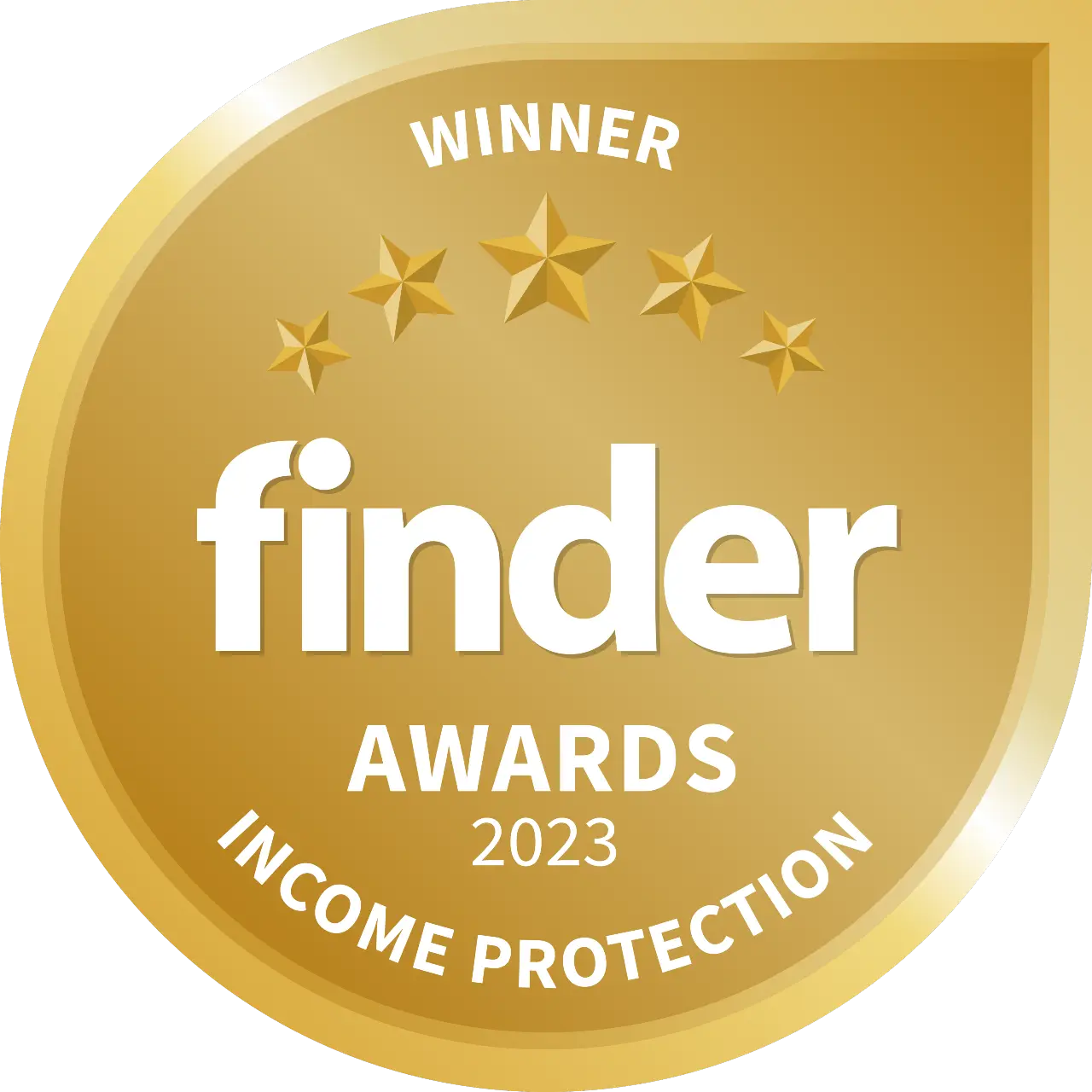
Want to know which policies are market-leading? Finder's data and insights experts created a rating algorithm to compare 12 income protection insurance policies in Australia across pricing and key features. Our 2023 winners are:
Overall winner: TAL Accelerated Income Protection
Highly commended: NobleOak
Highly commended: Insuranceline Income Protection
According to the latest Finder awards research, a policy with NobleOak may cost as little as
$24.72 per month


Finder's research team gathered 150+ quotes from 10 insurance brands across 32 different customer profiles (e.g. diverse ages, smoker statuses, occupation types and genders) in February 2023.
Based on this research, here are the average costs for non-smokers and smokers. This average is calculated across male and female white-collar workers between the ages of 30 and 40 for each brand.
| Insurer | Non-smoker average monthly premium | Smoker average monthly premium | Apply today |
|---|---|---|---|
| TAL | $30.38 | $41.72 | Get quote |
| RAC | $36.38 | $57.50 | More info |
| RACQ | $42.69 | $52.80 | More info |
| Zurich | $43.02 | $55.92 | More info |
| NobleOak | $36.51 | $57.27 | Get quote |
| Bendigo | $46.36 | $58.52 | More info |
| Aspect | $59.39 | $87.72 | More info |
| AAMI | $60.84 | $76.06 | Get quote |
| Insuranceline | $60.84 | $76.06 | Get quote |
| Suncorp | $60.84 | $76.06 | More info |
While it's counterintuitive, you'll want to consider insurance when you're in tip-top shape. This is absolutely a worthwhile investment of your time and helps provide a safety net... lock it in early to get better terms if you can. If you wait and get your cover at a later date, you might find the specific condition you've since had is excluded from your policy.

Pascale Heylar-Moray
Financial literacy advocate
No one is ever really prepared for life's harsh surprises, but the right income protection insurance can help soften the blow during a tough time for your family: financially, emotionally and physically while you're on a claim.

Phil Thompson
Financial Adviser at Skye Wealth
There's a lot more to finding the right cover than simply looking for the cheapest deal. Ultimately, you get what you pay for with income protection. In my view, policies held in super are rarely worth it in the long run. Going directly to an insurer or a broker is the pathway to a more comprehensive policy.

James Martin
Finder's life insurance editor
Our income protection insurance guides can help you compare and understand what cover option is right for you.
Some more helpful stuff

Income protection insurance: A beginner's guide
Learn the key points about how income protection works.

How does my job affect my income protection?
Tradies are well aware of the dangers of their work. Find out how insurers see things.
Is income protection insurance tax-deductible?
Here's why income protection is often (but not always) tax deductible.

Is income protection worth it?
A balanced look at how income protection can protect you.
We put together a list of exclusive deals and sign-up offers below to help you save:
| Store | Discount | |
|---|---|---|
|
Chance to win a $1,000 gift card Protect your family with an Insuranceline policy and you can go into the draw for a chance to win a $1,000 gift card. New Customers only, T&Cs apply. Last verified |
Deal ends |
|
|
Get 12 months income protection for the price of 11 New members will get a one month free when paying annually Last verified |
||
|
Medibank health members save 10% If you’re a Medibank health member, you can enjoy a 10% policy discount annually. Last verified |
Want to find out more about a specific insurer? We've reviewed over 20 of them. Here's a bunch of the most popular ones:
If the brand you're looking for isn't here, check out our directory.




Find out how you can get income protection insurance for anxiety.
Learn how to get the right insurance if you’re working from home.
A guide to everything you need to know about income protection claims.
Find out why income protection is an important tool to combine with your entitled sick leave.
Income protection will pay out for a certain period of time known as the benefit period. This can vary based on a number of factors.
Yes, Medibank does income protection too. You can get up to $12,500 a month.
Although income protection and personal accident cover both provide you with income replacement, there are key differences. Read on and compare.
One of the benefits of income protection insurance is that you may have the ability to claim a tax deduction on your premium benefits. Find out if the same rules apply for policies inside super.
Find out why you should be thinking about income protection insurance if you're a keen sports player.
Income Protection has specific features designed for dentists including needlestick cover.